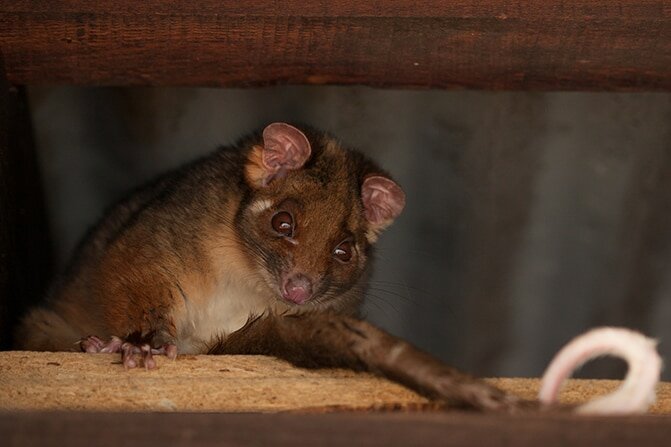
Possums might be cute, but they’re also a nuisance. Possum proofing your roof can be done quickly, efficiently and with little danger to the animal if you know what you’re doing, but they’re likely to outwit an amatuer who doesn’t know the basics.
There are plenty of services that will remove wildlife for a fee, but they can be quite costly due to the amount of potential man-hours and preparation that goes into catching a live wild animal. Alternatively, you can save that money by trying one of a few DIY methods.
On top of the difficulty of capture, there’s a couple of laws that dictate exactly how you can capture a possum, and what you can do with it afterwards. We’ll be covering not only how to how remove them, but what you should do once they’re caught.
The first thing that you’ll need to do is make sure that you are, in fact, dealing with a possum. The first instinct of most Australians when they hear roof rustling is to assume that it’s a brush-tail, but it could be rats or or even an errant cat.
Possums are nocturnal creatures, so they’ll be making the most amount of noise at dusk and dawn when they come back to the house; they’re noticeably more quiet at night, but can be very loud when tiredly coming in during the morning hours. Look for signs of entry around these times.
They also leave spoor around, which is usually cylindrical, but can vary in colour and shape due to their diet – although it’s much larger than most of the creatures they’re often mistaken for.
Once you’ve determined that it’s a Possum, you need to figure out how it’s physically getting into your roof and where it’s nest is. There’s a few ways you can go about doing this:
After you find the gap in your roof, or whatever devious methods the possums is using, you need to seal it. Don’t use light materials or chicken wire, as they can rip it off entirely with their hands and claws.
Instead, board it over with hardwood or similarly hard substances, and keep some kind of light on in your roof for a couple of days. The lack of entry combined with the new, harsh light might scare it off a possum for good, and if you’re lucky, this will stop the problem immediately. However, there’s still a decent chance it’ll be coming back in another form.
If denying access is no good, or there’s simply too many ways to access your roof due to its design, you can try a few deterrents. Possum deterrent pellets and sprays do work, though they’re not foolproof.
Bright lights, particularly motion-sensor ones (although make sure the sensors are such that they’ll catch small creatures scampering about) around the entry passage will also be a large deterrent for any possum coming home for the night. Additionally motion-activated sprinklers will give it a jump-start that it won’t forget in a hurry without being too cruel.
Alongside deterrents, you can also take steps to make your house less appealing. Removing outside bins, any large grass, or other coverings from the vicinity will make a possum feel much less secure in using your home as a base of operations.
It’s illegal to relocate a possum more than 50m away from its capture point without having some kind of accreditation, which makes the question of relocation a very tricky one. Instead, you should pursue small changes to keep the possum away from your exact vicinity, outlined in the capture section below.
The best way to go about this is twofold: one, with a humane possum trap (easily purchasable from most hardware locations), and with a DIY possum home.
When buying a trap, make sure that they’re not in any way compromised with wire, as possums tend to hurl themselves at the bars to try and escape, leading to self-harm (especially on their sensitive nose-tips).
Place your trap at the entry points you’ve already discovered with some bait, and check on it daily. Once you’ve gotten the possum, board up the entryway so that another doesn’t take its place, and then relocate it to a possum home.
Possum homes are very , and its very easy to make a possum consider it its new home. All that you need is some kind of weatherproof box of wood that you can hang or affix to just about anywhere, and a few things to entice it in.
If you can find the possum’s nest in your roof (assuming it’s not buried deep) then add it to the new home alongside some new fruits; this will make the possum not only associate it with home, but give it an incentive to investigate in the first place.
It must be noted that possums are protected fauna around much of Australia, and catching possums without a license is illegal in some states. If you require tree branch removal to remove access from your roof, make sure to contact a licensed tree arborist so that all branch removal is completed safely.